作品简述
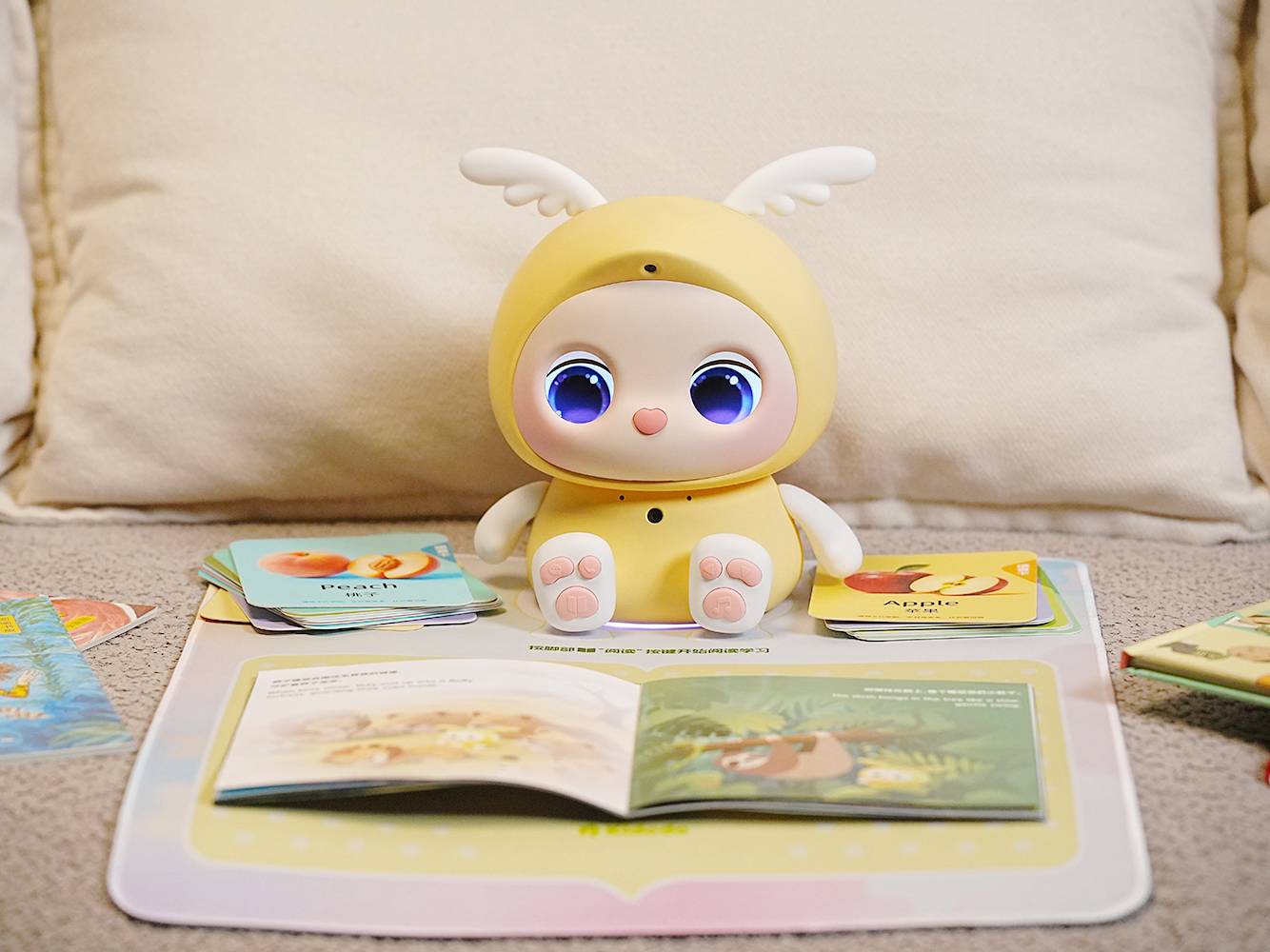
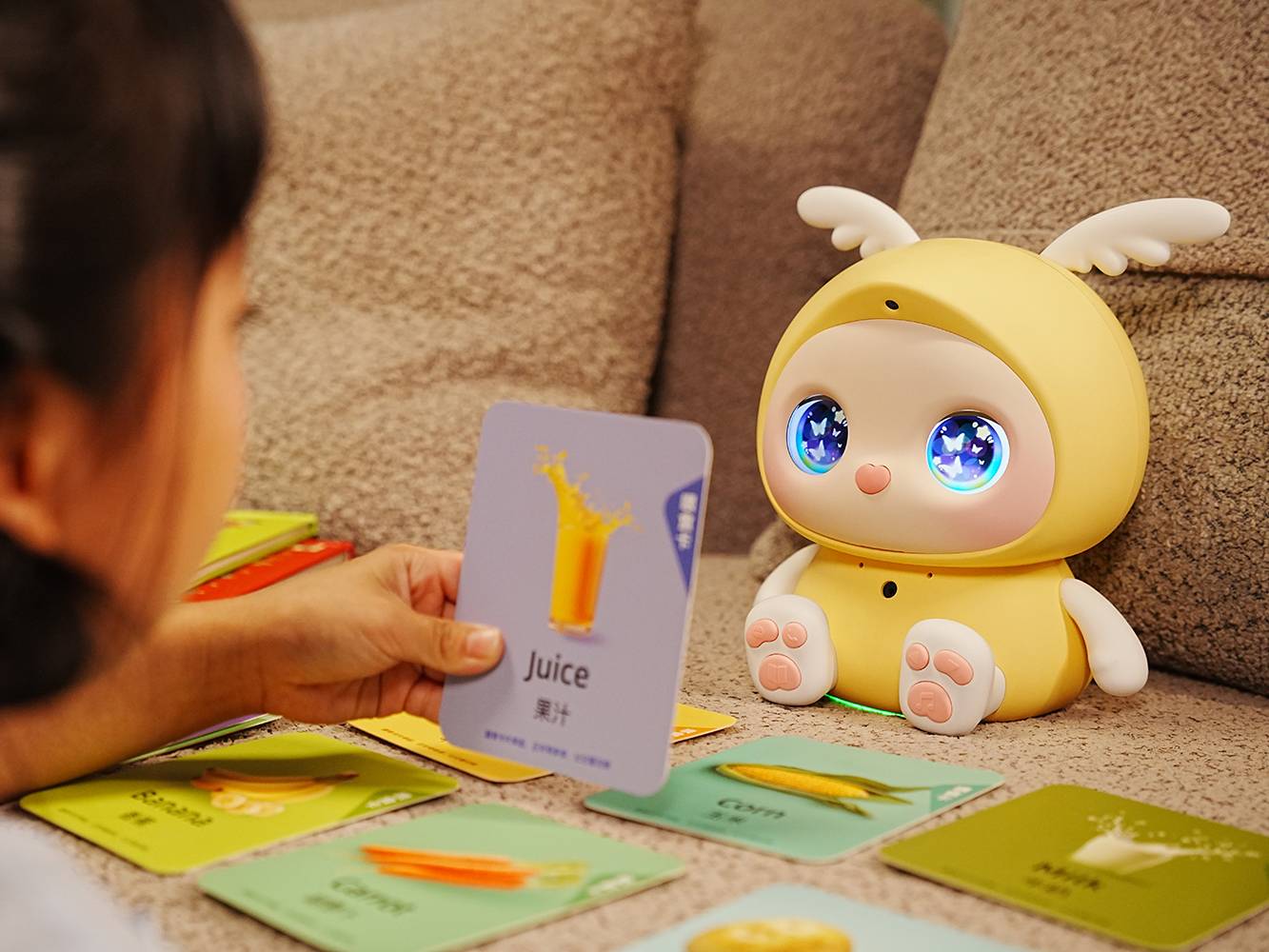
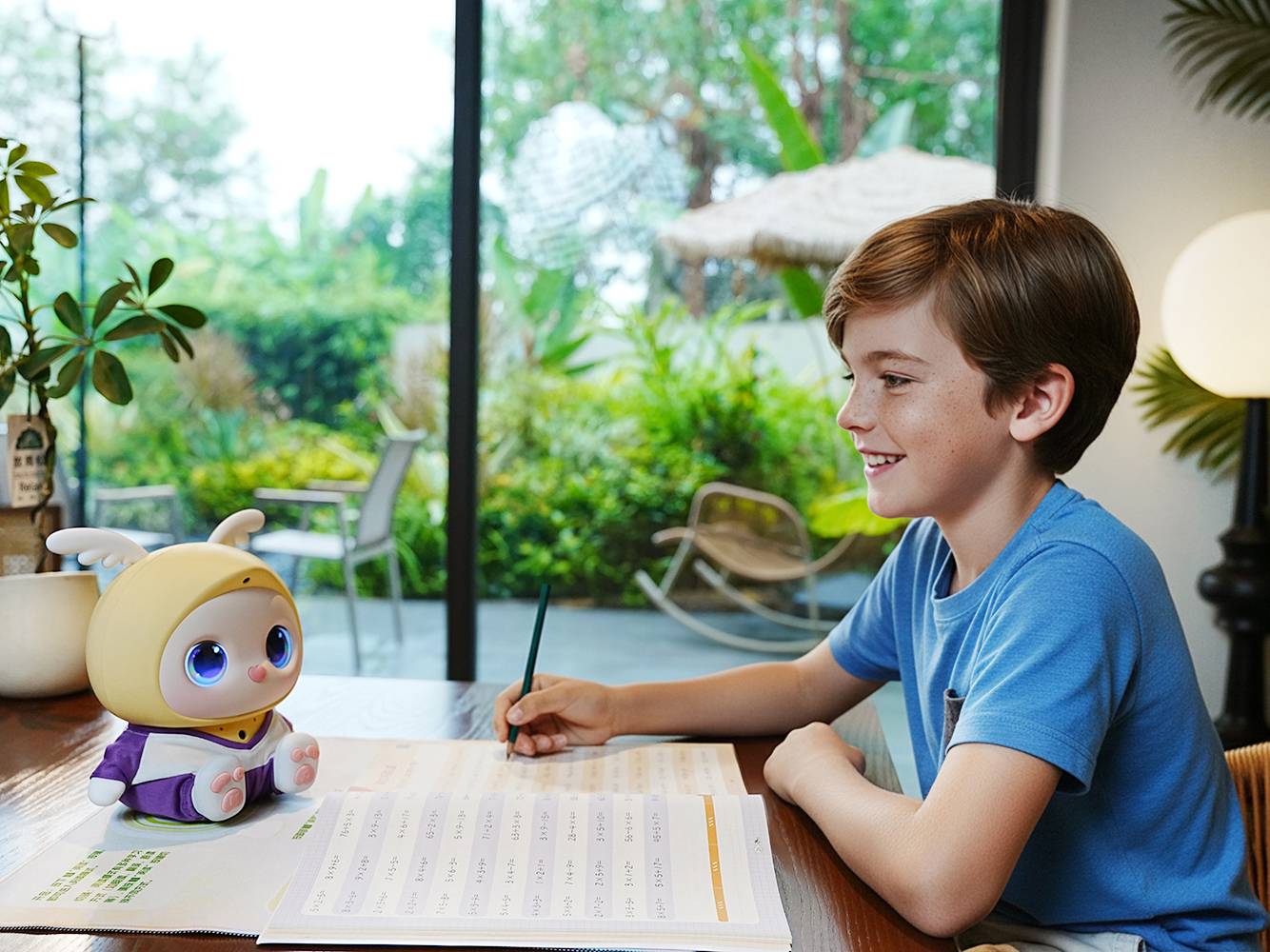
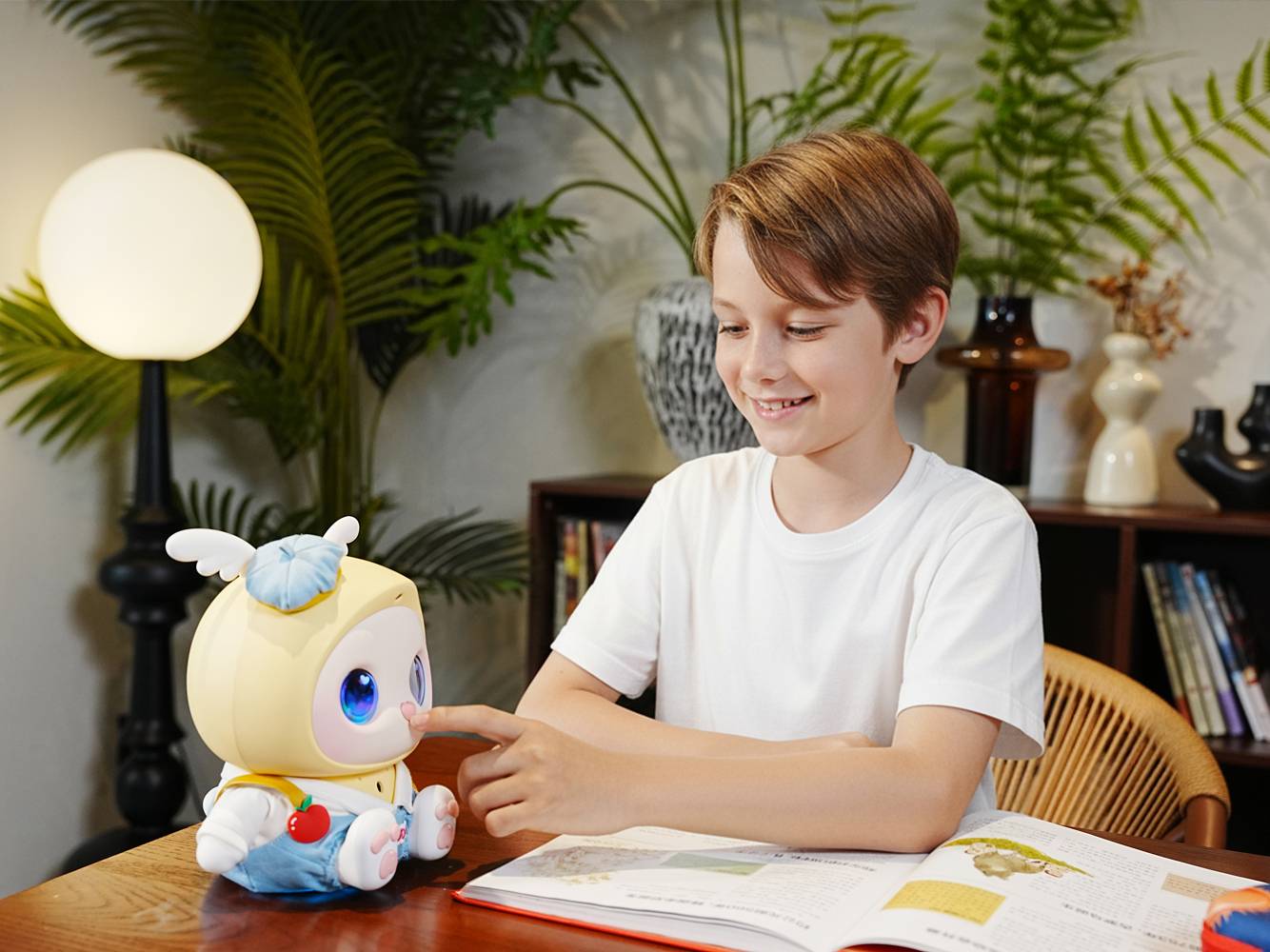
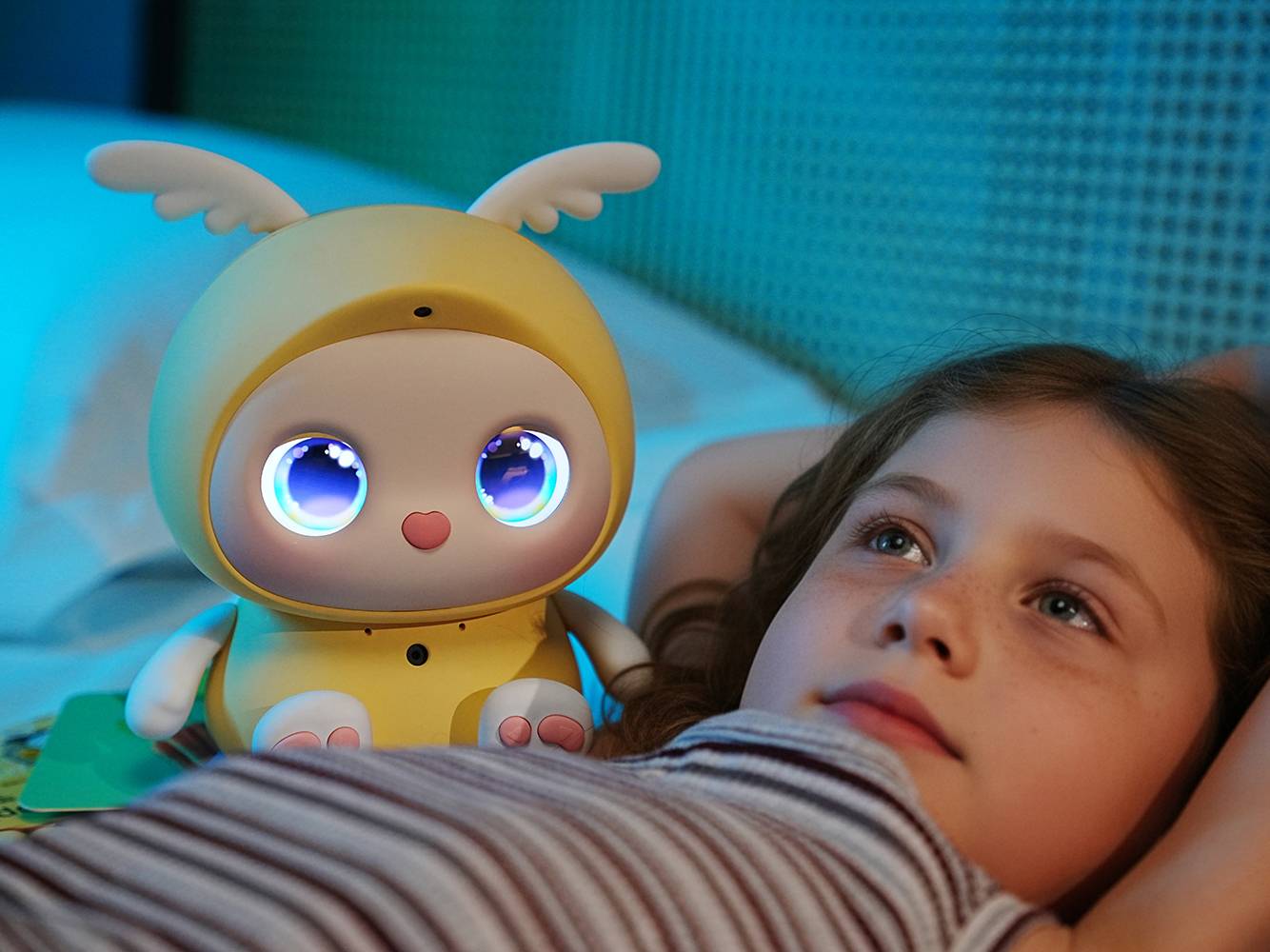
奇多多(Kidodo)是一款专为 0–10 岁儿童设计的 AI 学伴机器人,旨在成为孩子的“智能成长伙伴”。以多模态交互为核心设计理念,奇多多能够“看见、听懂、回应”孩子,在自然对话中帮助他们学习多种语言、养成阅读习惯、拓展认知边界。
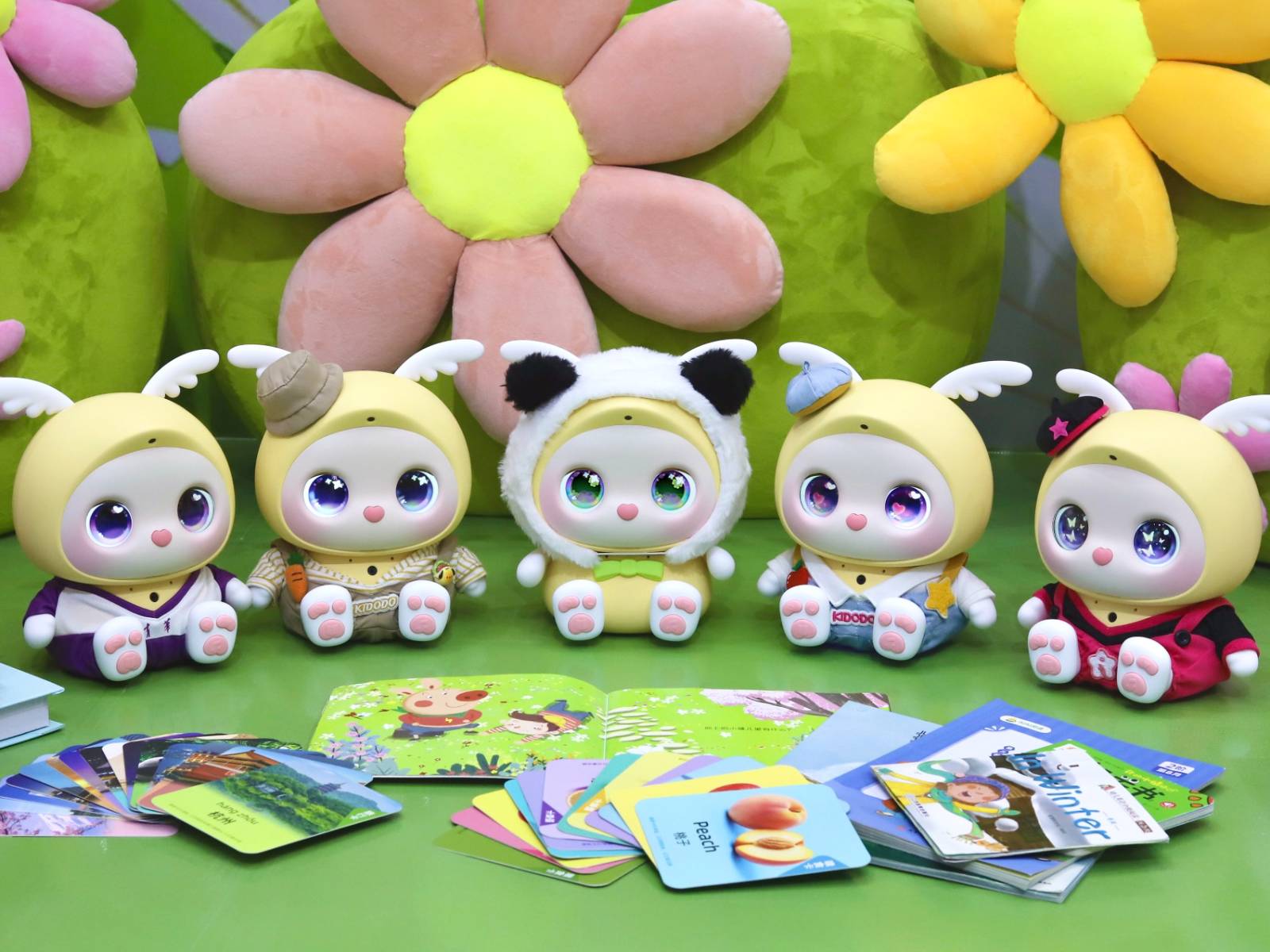
其外观采用圆润柔和的造型语言,配合食品级硅胶材质与可更换的“娃衣系统”,传递出温暖、亲和、富有生命力的情感体验,让科技更像朋友而非机器。
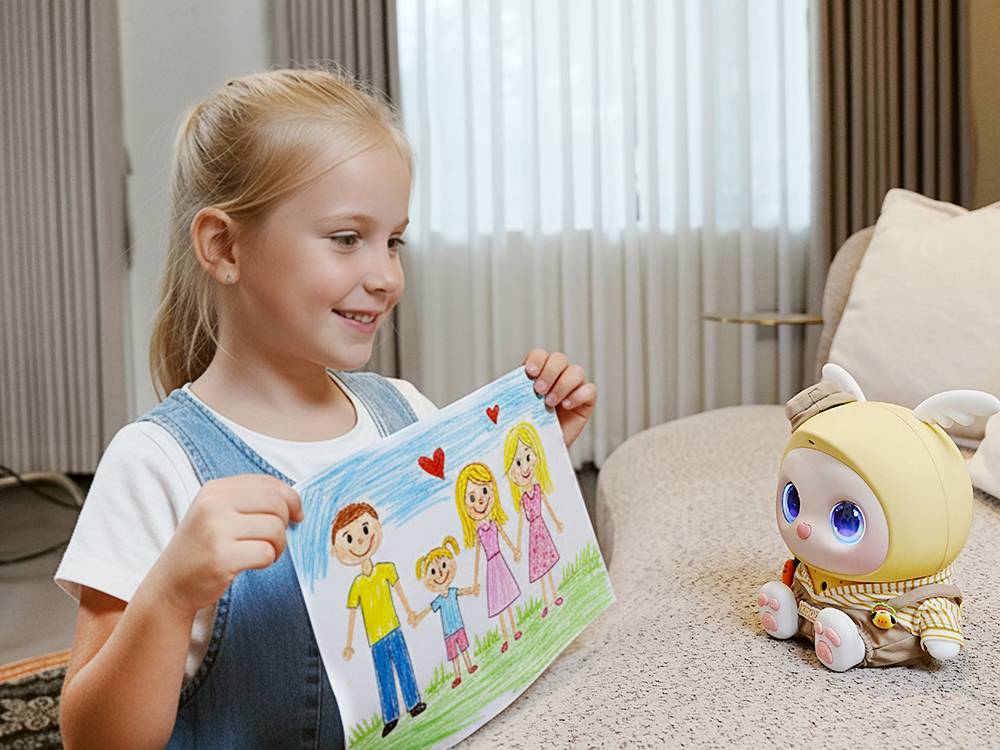
奇多多搭载端到端实时多模态大模型,具备高精度视觉识别与自然语音互动能力。它可以识别并讲解绘本、杂志、涂鸦及实物,支持英语、中文、日语、西班牙语等 23 种语言。基于毫秒级延迟反馈、100 种眼神与 48 种情绪系统,奇多多能根据孩子语气与表情进行自然互动,实现“边看边问边学”。它还拥有分龄分级的百万儿歌故事资源库,支持 AI 文字或图片生成故事,并通过 App 与家长互联,一键语音留言或通话。
在安全与环保设计上,奇多多采用食品级硅胶耳朵、防蓝光显示、漫反射灯带与磁吸摄像头盖,全面呵护儿童使用体验。可回收环保材料与模块化结构延长了产品生命周期,减少电子废弃。
在数据安全方面,奇多多创新性地引入 PrivateLoRA 技术,建立隐私优先的大模型架构。所有数据均遵循最小化原则并实现端到端加密,敏感信息匿名化处理,确保儿童隐私与使用安全。
用户价值
本项目围绕儿童早期教育中的全球性家庭痛点展开深入思考,重点在功能创新、情感链接与用户体验层面进行了系统性的探索与改进。当前,全球家庭在儿童成长陪伴中面临相似挑战:在中国,超过70%的儿童主要由祖辈照看,语言与认知刺激存在代际差距;在韩国,高质量早教与英语幼儿园费用居高不下;在日本,家庭育儿时间分配失衡,照护压力集中于母亲;在欧洲,多语言教育需求普遍但家庭支持资源分散;在北美,家长高度重视阅读教育,却因时间有限与私教成本高昂而难以持续陪读。
基于上述现实,奇多多以“AI共情 + 多模态认知”为核心,打造一位能够长期陪伴、自然互动并理解儿童成长阶段的AI家庭伙伴。产品通过无屏沉浸式交互、实时语音与视觉理解以及情感反馈机制,在减轻家长陪伴压力的同时,为儿童提供持续、稳定且具情感温度的早期学习与成长支持,让更多家庭在有限时间与资源条件下,依然能够参与并见证孩子的成长过程。
商业表现
该项目在商业层面展现出显著成效。奇多多(Kidodo)于首次上市后 一周内销量突破 10,000 台,在儿童早教与AI学伴细分市场中实现快速渗透,验证了产品定位与技术路线的市场可行性。在品牌与传播层面,项目以“AI共情 + 多模态认知”的差异化价值建立了清晰的市场认知,推动品牌从软件与技术背景成功延展至家庭级智能硬件领域。
同时,奇多多作为公司首款硬件产品,不仅形成了稳定的用户基础,也显著提升了品牌在儿童教育与家庭AI场景中的专业度与可信度,为后续产品矩阵与长期商业增长奠定了可持续的市场基础。
社会影响
奇多多(Kidodo)以“AI共情 + 多模态认知”重塑了儿童早期教育与家庭陪伴的方式,改变了传统以屏幕为中心、单向灌输的被动学习现状,推动儿童教育产品向“沉浸式互动、情感共融、个性化成长”方向发展。项目首次将端到端多模态大模型深度应用于儿童教育场景,构建视觉、语音与情绪反馈的完整交互闭环,使AI从工具升级为具备共情能力的学习与陪伴伙伴。在文化与教育层面,奇多多通过跨语言、跨文化的灵活适配,促进优质教育内容的普惠传播,缓解家庭陪伴与科学早教资源不足的问题。在可持续发展方面,产品以本地化隐私计算与“隐私优先”的技术设计,树立了儿童家庭AI产品的数据安全新标准,推动行业向更负责任、更人本的智能化方向演进。
团队组织
- 核心团队:
- 创始人曾晓东博士师从国际计算机科学院士Isabel Tracoso,是国内较早一批做机器翻译的研究者。入选《麻省理工科技评论》MIT TR35、全球35位35岁以下科学家榜单(入选者还包括Kimi杨植麟、旷视印奇、快手宿华等AI领域知名创业者及企业家)。曾博士在阿里巴巴、蚂蚁集团累计任职十年,曾担任阿里机器翻译系统核心引擎负责人。他也是蚂蚁集团技术实验室联合创始人,主导了“无人超市”、“刷脸支付”、“IOT硬件”等多个创新产品。
- CPO杨冬蕴硕士毕业于诞生了20名诺贝尔奖得主的英国爱丁堡大学,是国际红点设计奖、IF设计奖得主,并先后于华为、阿里、字节等企业任职,曾担任产品负责人、设计总监、业务负责人,是带领过产品、用研、设计、增长团队的全链路业务人才。所负责项目荣获“哈佛商业评论-中国新增长数字化革新榜”、“2020年度环球金趋势奖年度赋能创新奖”。在PCon全球产品创新大会、外滩大会等行业会议中担任分享嘉宾,申请专利20+项。
- 首席架构师硕士 Alex 多项AI算法大赛全国冠军 、连续创业者、NLP、知识图谱、同济大学,香港理工大学荣誉毕业生,擅长基于大数据丶NLP和知识图谱 搭建AI原生的数据智能系统。
- 模型科学家 Vincent 复旦大学硕士,在ICML/KDD等顶会发表论文。
- 产品总监 Jay 美国康奈尔大学IS与建筑双学 负责项目获得多项国际奖项 并且成功0-1孵化出海创新业务
- 商务总监 Joe 硕士十余年市场营销从业经验·连续获评优秀管理丶优秀团队奖项·曾操盘A股、美股等上市科技公司PR、GTM项目·具备丰富智慧医疗丶智慧物联等重直行业服务经验
流程方法
1.流程管理创新|“设计 × AI × 教育学”协同机制
项目采用设计、AI工程与教育学并行协同的研发流程,从需求定义阶段即引入儿童注意力与情绪体验指标,反向驱动模型结构与交互设计,并在每轮迭代中同步进行行为测试与情感评估,确保产品始终围绕真实儿童使用场景成长。
2.工具与方法创新|端到端多模态模型的场景化训练
项目将端到端实时多模态大模型与儿童教育场景深度绑定,通过语音、视觉与情绪信号的联合采集与同步标注,构建真实互动数据闭环,在350ms内完成理解与生成,并以76B参数推理能力支持开放式提问与实时科普。
3.执行过程创新|情感可量化的AI共情设计方法
团队在执行层面引入情感工程化方法,将儿童情绪拆解为可计算状态,并映射至100种眼神与48种情绪表达,使语言、语气与表情协同响应,并通过持续反馈动态优化共情策略,实现可持续演进的情感陪伴。
4.数据与隐私流程创新|PrivateLoRA 的“隐私优先”AI管理
项目通过 PrivateLoRA 实现个性化模型的本地训练与推理,儿童记忆与学习偏好仅在设备端计算,敏感数据不上传云端,在保障个性化体验的同时,建立了可持续、可复制的儿童AI隐私保护流程标准。
项目投入
本项目自 2024 年 12 月立项 起,历经概念研究、技术验证、产品设计与系统整合等多个阶段,于 2025 年 9 月完成首次上市,整体周期约 10 个月。在此过程中,团队投入 数百万元级别的研发与设计成本,涵盖自研多模态大模型训练、真实交互数据采集与分析、情感计算系统设计、儿童体验测试以及隐私安全架构搭建等关键环节。高强度、跨学科的持续投入,保障了产品在技术成熟度、情感体验与设计完成度上的综合突破。
达成情况
1. 项目初心与目标达成情况
本项目的初心在于回应家庭陪伴不足与早期教育资源不均的问题,探索一种融合前沿AI技术与情感关怀的全新儿童学习与陪伴方式。项目目标不仅是打造一款具备技术领先性的AI学伴产品,更希望让人工智能真正理解儿童、陪伴儿童成长。
项目最终在实时多模态互动、情感共情体验与儿童长期使用黏性等方面取得了超出预期的表现。产品在上市后获得了良好的市场与用户反馈,验证了“AI共情 + 多模态认知”路径在儿童教育领域的可行性与前瞻性。
2. 战略目标与商业结果
该项目是公司“AI for Growth”长期战略的重要组成部分,旨在构建以儿童为核心、以情感与安全为底线的家庭级AI产品体系。奇多多作为公司首款智能硬件产品,不仅成功落地了这一战略理念,也在商业层面实现了正向验证。
产品于首次发售一周内销量突破 10,000 台,在儿童早教与AI学伴领域建立了领先优势,为公司后续AI产品矩阵与品牌发展奠定了坚实基础。
Project Description
Kidodo is an AI-powered learning companion robot designed for children aged 0–10, aimed at becoming a child’s “smart growth partner.” With multimodal interaction as its core design philosophy, Kidodo can “see, hear, and respond” to children, helping them learn languages, develop reading habits, and expand their cognitive boundaries through natural conversation.
Its design features soft, rounded shapes made with food-grade silicone and an interchangeable "wearable system," creating a warm, friendly, and lifelike emotional experience. Kidodo uses an end-to-end real-time multimodal model, enabling high-precision visual recognition and natural speech interaction. It supports 23 languages, including English, Chinese, Japanese, and Spanish, and can recognize and explain picture books, magazines, doodles, and real-world objects.
With an innovative private-first architecture powered by PrivateLoRA technology, Kidodo ensures data security and privacy. It also features recyclable materials and modular construction, promoting sustainability and extending the product's lifecycle.
Kidodo blends cutting-edge AI with emotional design to create a truly unique and safe experience for children and parents alike.
User Value
This project addresses shared global challenges in early childhood education through in-depth exploration of functional innovation, emotional connection, and user experience. Families around the world face similar constraints: in China, over 70% of children are primarily cared for by grandparents, resulting in generational gaps in language and cognitive stimulation; in South Korea, early education and English kindergarten tuition can reach prohibitively high monthly costs; in Japan, childcare and household responsibilities disproportionately burden mothers, leading to severe time constraints; in Europe, multilingual learning is common, yet family support resources are fragmented; and in North America, parents place strong emphasis on reading education, while declining陪读 time and high private tutoring costs limit sustained involvement.
In response, Kidodo was created as an AI family companion that can accompany, interact with, and understand children’s developmental needs. Powered by AI empathy and real-time multimodal cognition, Kidodo offers screen-free immersive interaction, continuous learning support, and emotionally responsive engagement. By easing parental time pressure while providing children with consistent, high-quality educational companionship, the project enables families to remain meaningfully involved in their children’s growth, even under limited time and resource conditions.
Business Performance
The project demonstrated strong commercial performance following its launch. Within the first week of release, Kidodo achieved over 10,000 units sold, enabling rapid market penetration in the AI-powered early childhood education and learning companion segment, and validating the product’s positioning and technological approach.
In terms of brand and communication impact, the project established a clear and differentiated market identity centered on “AI empathy and multimodal cognition,” successfully extending the brand from a technology-driven background into the family-oriented intelligent hardware space. As the company’s first hardware product, Kidodo built an early user base while significantly enhancing brand recognition, credibility, and long-term commercial potential in the children’s education and family AI market.
Social Impact
Kidodo redefines early childhood education through the integration of AI empathy and multimodal cognition. By transforming traditional screen-based, passive learning into immersive, voice-driven interaction, the project advances the industry toward more human-centered, emotionally engaging, and personalized educational experiences. As one of the first products to deeply integrate an end-to-end multimodal large model into real-world children’s learning scenarios, Kidodo establishes a complete interaction loop encompassing vision, voice, and emotional feedback—elevating AI from a functional tool to an empathetic learning and companionship partner. Culturally and educationally, its cross-language and cross-cultural adaptability enables flexible deployment across diverse families and education systems, contributing to more inclusive access to quality early education. From a sustainability perspective, Kidodo’s localized privacy computing and “privacy-first” architecture set a new benchmark for responsible family AI products, promoting a safer, more ethical, and people-oriented direction for the intelligent hardware industry.
Team Structure
Core Team:
- Dr. Zeng Xiaodong, Founder
Dr. Zeng, a disciple of internationally renowned computer scientist Isabel Tracoso, is one of China’s early pioneers in machine translation. He was selected for the MIT TR35, a list of the top 35 innovators under 35, which also includes notable AI entrepreneurs such as Kimi Yang Zhilin, Meituan’s founder, and Kuaishou’s Su Hua. With over 10 years at Alibaba and Ant Group, Dr. Zeng led the core engine of Alibaba's machine translation system. He is also a co-founder of Ant Group's Tech Lab, where he spearheaded innovative products like “unmanned supermarkets,” “facial recognition payments,” and “IoT hardware.”
- Yang Dongyun, CPO
A graduate of the University of Edinburgh, home to 20 Nobel laureates, Yang has won prestigious design awards such as the Red Dot and IF Design Awards. With extensive experience at Huawei, Alibaba, and ByteDance, she has held roles as product manager, design director, and business lead. Yang has led cross-functional teams, including product, user research, design, and growth. Her projects have won accolades such as the Harvard Business Review China New Growth Digital Innovation and Global Golden Trend Empowerment Innovation awards. She is also an active speaker at conferences like PCon Global Product Innovation and Bund Summit and holds over 20 patents.
- Alex, Chief Architect
A serial entrepreneur and multiple national champion in AI algorithm competitions, Alex holds a Master’s degree from Tongji University and the Hong Kong Polytechnic University. He specializes in building AI-native data intelligence systems using big data, NLP, and knowledge graphs.
- Vincent, Model Scientist
A Master's graduate from Fudan University, Vincent has published papers at top-tier conferences like ICML and KDD. His research expertise lies in machine learning and data modeling.
- Jay, Product Director
Jay holds dual degrees in Information Science and Architecture from Cornell University, leading projects that have won numerous international awards. He has successfully incubated new businesses from 0 to 1, expanding them into global markets.
- Joe, Business Director
With over 10 years of experience in marketing and business management, Joe has won multiple "Outstanding Management" and "Best Team" awards. He has managed PR and go-to-market (GTM) strategies for tech companies listed on the A-shares and US stock exchanges. Joe also has rich experience in smart healthcare and IoT industries.
Flow
1.A parallel collaboration workflow integrating design, AI engineering, and educational science was established from the earliest stages. Children’s attention and emotional experience were defined as core metrics, directly informing model architecture and interaction logic, with behavioral testing and emotional evaluation conducted in every iteration to ensure real-world child-centered design.
2. An end-to-end real-time multimodal large model was tightly coupled with children’s educational scenarios. By jointly collecting and synchronously labeling voice, vision, and emotional signals, a closed-loop interaction dataset was formed, enabling 350ms understanding and generation, while 76B-parameter reasoning supports open-ended questioning and real-time knowledge exploration.
3.An emotion-engineering approach was introduced, translating children’s emotional states into computable parameters mapped to 100 eye expressions and 48 emotional responses. Language, tone, and expression are coordinated in real time, with continuous feedback enabling an evolving and sustainable empathetic companionship.
4. A privacy-first AI management workflow was established through PrivateLoRA, enabling localized training and inference. Personalized memory and learning preferences remain on-device, with no sensitive data uploaded to the cloud, setting a scalable and sustainable privacy standard for child-focused AI products.
Project Investment
The project was initiated in December 2024 and progressed through concept development, technical validation, product design, and system integration, leading to its first market launch in September 2025. The overall development cycle spanned approximately 10 months. During this period, the team invested several million RMB in research and design, including in-house multimodal model training, interaction data analysis, emotional system design, child-centered usability testing, and privacy-first AI architecture development. This sustained, cross-disciplinary investment ensured a high level of maturity in both technological performance and emotional experience.
Project Achievements
1. Initial Vision and Outcome Evaluation
The project was initiated in response to the lack of quality family companionship and the uneven distribution of early childhood education resources. Its core objective was to explore a new form of child-centered learning and companionship that integrates advanced AI technology with emotional care. Beyond technological leadership, the project aimed to create an AI companion capable of genuinely understanding and supporting children’s growth.
The final results exceeded expectations, particularly in real-time multimodal interaction, empathetic engagement, and long-term user retention among children. Positive market and user feedback after launch validated the feasibility and forward-looking value of the “AI empathy + multimodal cognition” approach in early childhood education.
2. Strategic Alignment and Business Impact
This project is a key implementation of the company’s long-term strategy, AI for Growth, which focuses on building family-oriented AI products grounded in emotional intelligence and privacy-first principles. As the company’s first intelligent hardware product, Kidodo successfully translated this strategic vision into a tangible offering and achieved strong commercial validation.
Within the first week of launch, sales exceeded 10,000 units, establishing a leading position in the AI-powered early education segment and laying a solid foundation for the company’s future product ecosystem and brand development.



用户名
{{ item.email }} {{ moment(item.meta.createAt).format('YYYY-MM-DD HH:mm:ss') }}
回复:{{ item.mentioned }} {{ item.content }}
回复