Project Description
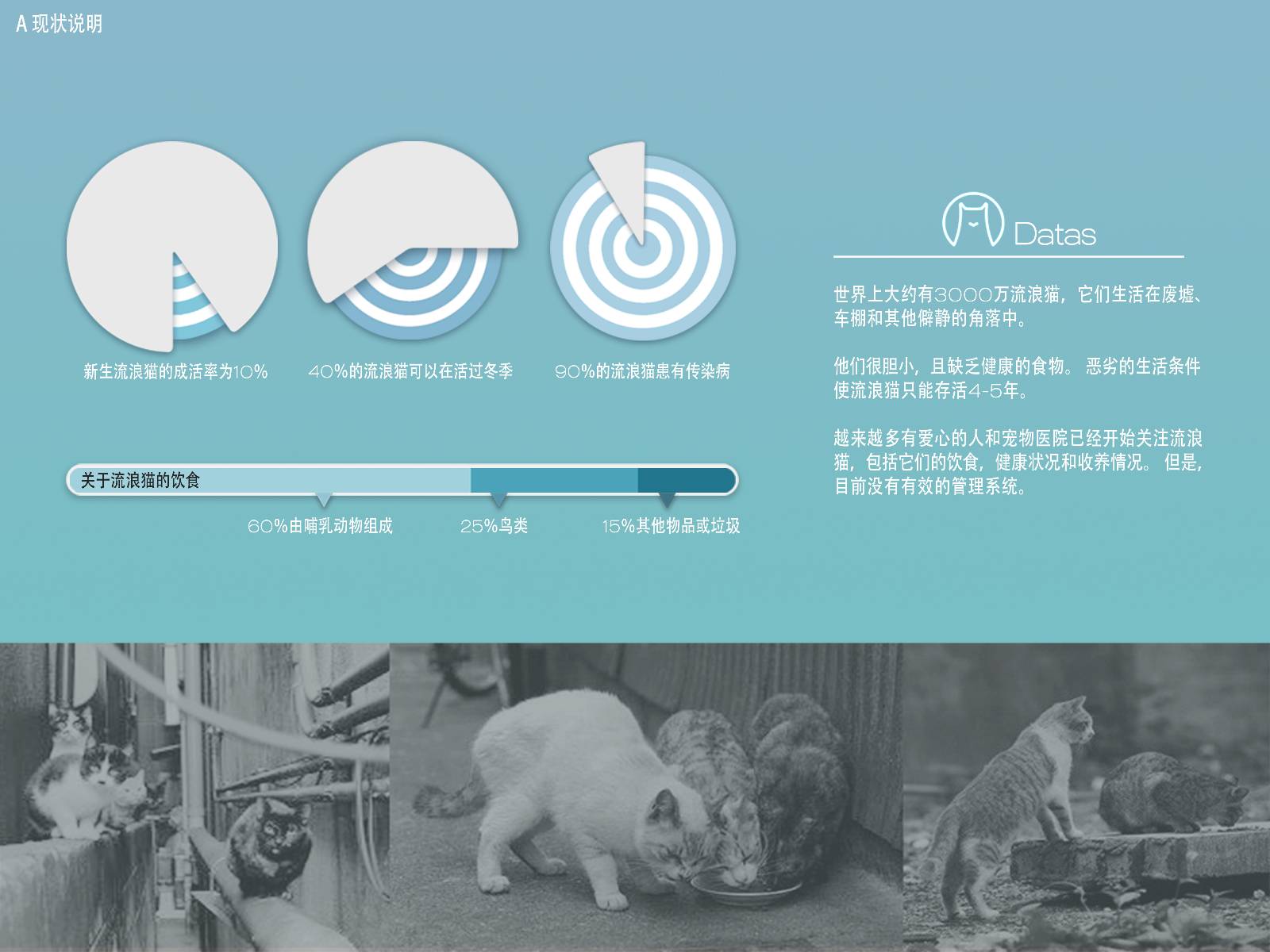
Groups of stray cats are common in public places such as communities and schools. They have brought about negative social impacts such as disturbing people, infringing on humans, and infecting viruses due to poor living conditions, sub-healthy growth conditions, and rapid reproduction. At the time, the law did not strictly stipulate the responsible subjects of stray animals and the law on protection of stray animals, making it difficult for victims to defend their rights.
At present, the domestic public's attitude towards stray cats is neutral or favorable. Most people are willing to feed, do not accept the stray animals to be killed or euthanized. In the society, the behavior of rescue stray cats through individuals, public welfare organizations or commercial cooperation is generally lacking professional Management and inefficiency have no significant results, even impulsive rescue behaviors that do not comply with the law. Although stray cat rescue services in China have certain principles and scales, there is no public service system that can improve their living conditions, control development trends, and establish people and cats. Long-term and effective benign relationship.
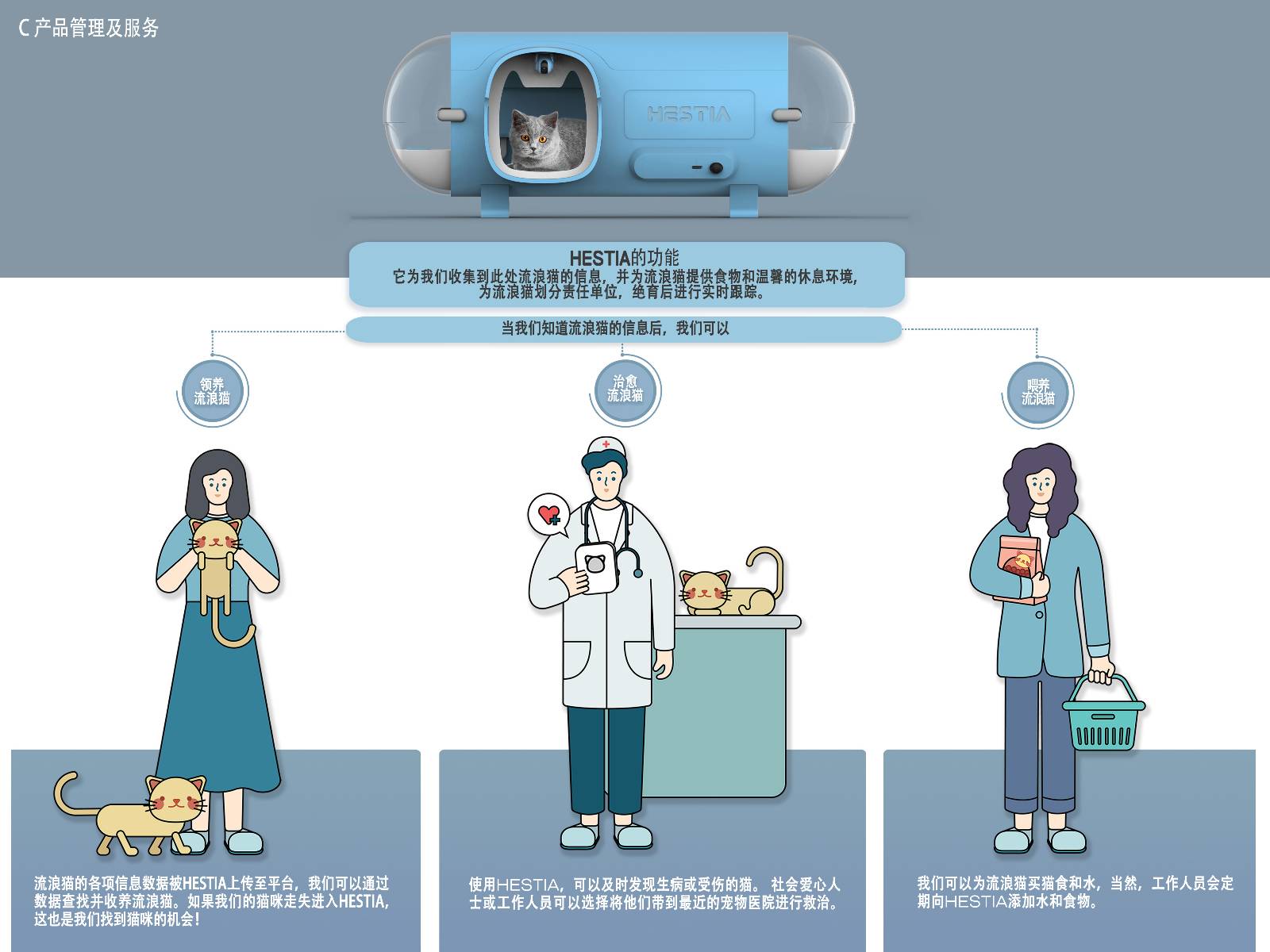
Therefore, it is necessary to solve this problem by design means, and try to build a management rescue system that combines entity management products and service interaction platforms. The stray cat public welfare management service system is a system that “legalizes” stray cat groups through the TNR principle, protects their living environment, and improves their human-to-cat relationships, as well as people-to-people relationships with different attitudes towards stray cats.
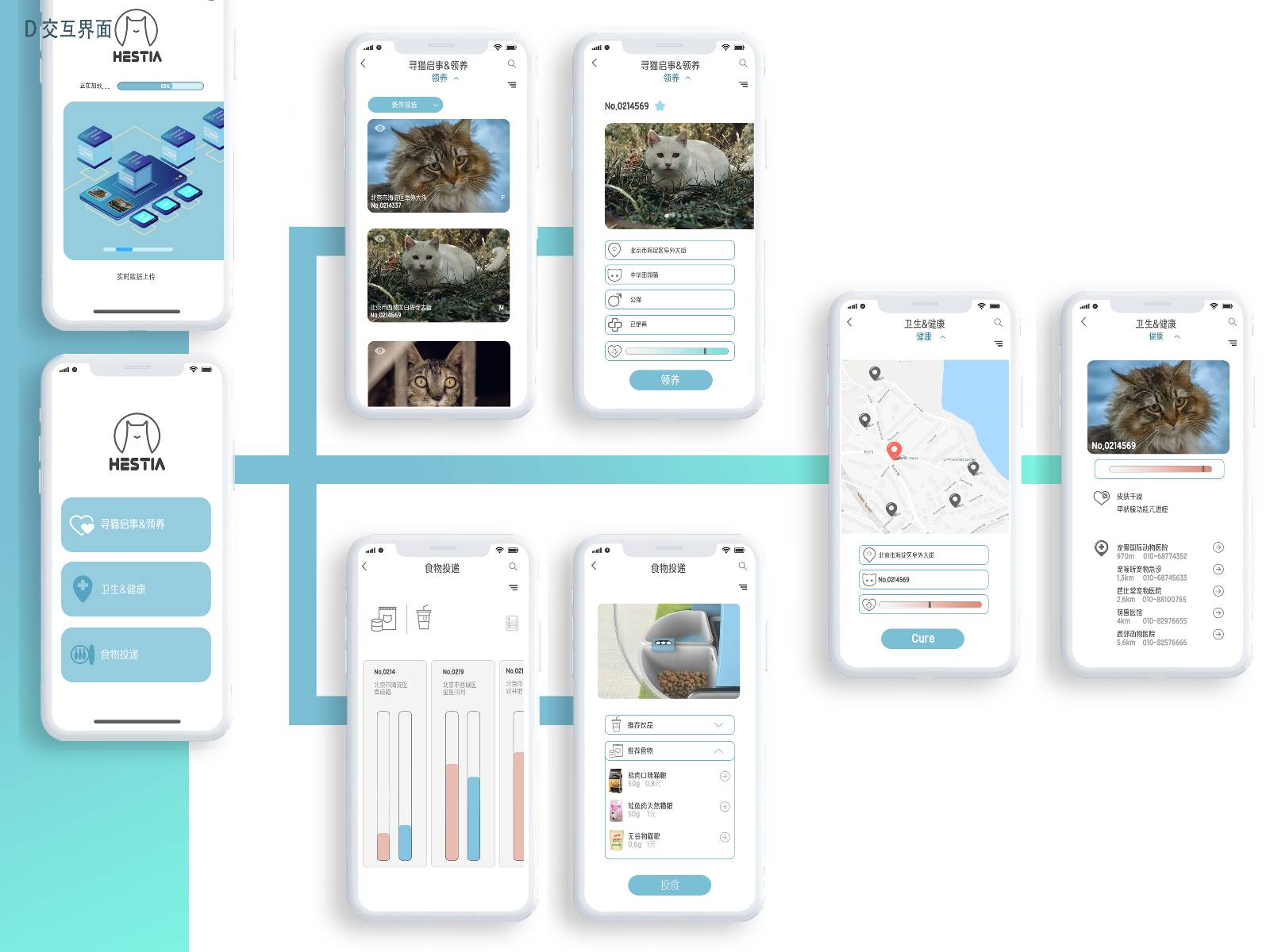
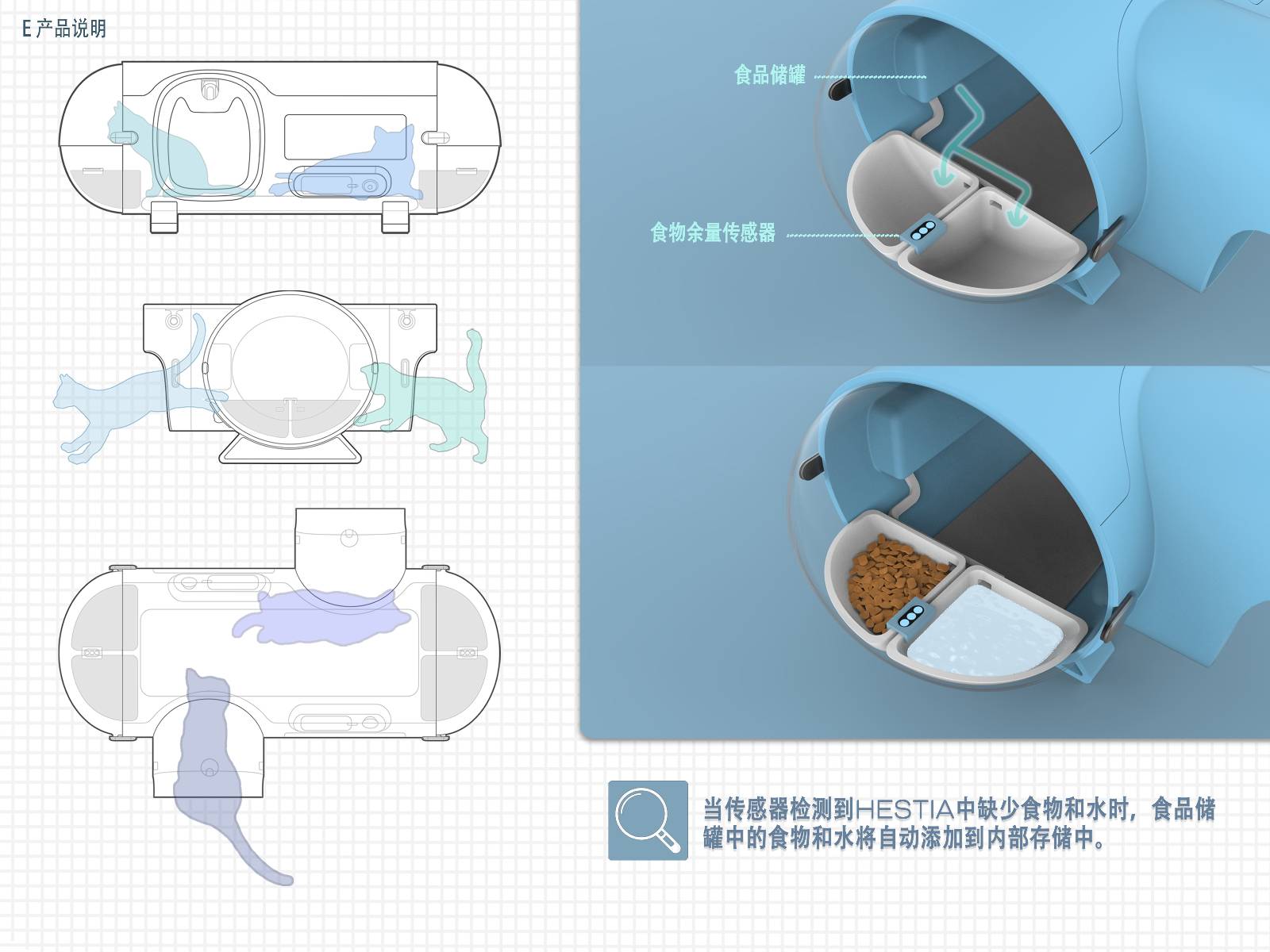
The management rescue system is divided into three phases: entity management products, database platforms, and service interaction platforms. The physical management product captures stray cats and uploads data, which is the first guarantee for implementing the TNR principle. It is also a temporary residence for stray cats in harsh environments. At the same time, the main responsibility unit for stray cats in the area can be divided according to the product location. After the return, it can play the role of proper supervision and tracking. The database stage uses the HTTP hypertext transfer protocol to store and transmit data. The interactive platform extracts data from the database, performs information sharing and data mining, and provides individual users with services such as adoption and feeding to protect and help stray cats. Public welfare organizations or pet hospitals can also use the platform to help stray cats and promote them. stand by.






用户名
{{ item.email }} {{ moment(item.meta.createAt).format('YYYY-MM-DD HH:mm:ss') }}
回复:{{ item.mentioned }} {{ item.content }}
回复